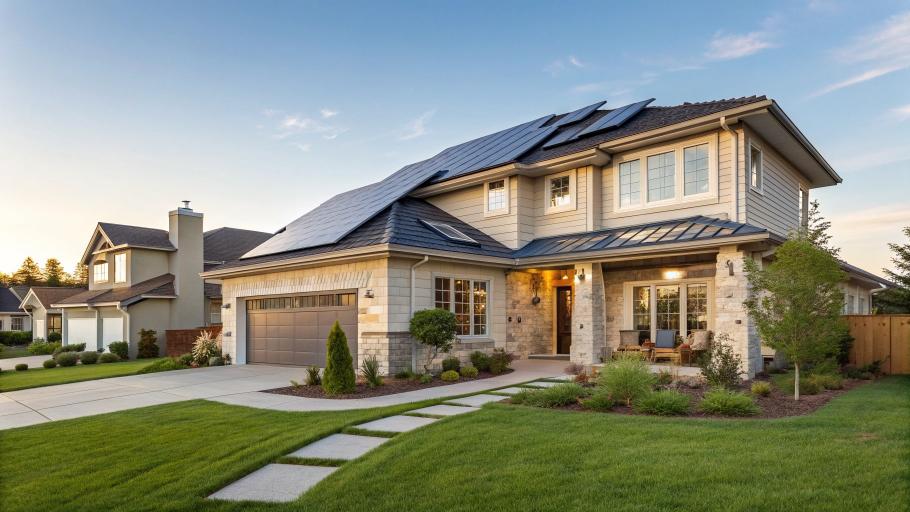
- Are Solar Panels Worth the Investment?
- The Bottom Line Up Front: Quick Answer
- How Much Do Solar Panels Really Cost in 2025?
- Solar Panel Cost Breakdown: Where Your Money Goes
- State-by-State Cost Comparison
- How Much Can You Actually Save with Solar Panels?
- Solar Panel Payback Period: When Do You Break Even?
- Federal Solar Tax Credit: The 30% Game-Changer
- State and Local Solar Incentives
- The Hidden Costs of Solar Panels
- Solar Financing Options: Cash, Loan, or Lease?
- Is Solar Worth It for YOUR Home? 5 Key Factors
- When Solar Panels Are NOT Worth It
- Conclusion: The Verdict on Solar Panel Cost Effectiveness
Are Solar Panels Worth the Investment?
You’ve probably asked yourself this question at least once: Should I spend $30,000 on solar panels?
It’s a huge number. That’s a new car. That’s a down payment on a second home. That’s your kid’s college fund. So when someone suggests you invest that kind of money in putting panels on your roof, you want to be absolutely sure it’s worth it.
The good news? For most homeowners, solar panels are one of the best investments you can make. We’re talking about saving $37,000 to $148,000 over 25 years. That’s money that stays in your pocket instead of going to the electric company every single month.
But here’s the catch—solar isn’t right for everyone. Your neighbor might save a fortune while you barely break even. The difference? Your roof, your location, your electric bill, and how long you plan to stay in your home.
This guide breaks down everything you need to know about solar panel cost effectiveness in 2025. We’ll cover real costs, actual savings, payback periods, and most importantly—whether solar makes sense for YOUR situation.
And if you’re on the fence? 2025 is a critical year. The federal tax credit that cuts 30% off your costs is set to change, and getting solar installed this year could save you thousands.
Let’s dive in.
The Bottom Line Up Front: Quick Answer
Want the short version? Here it is:
Yes, solar panels are cost-effective for most homeowners IF:
- Your monthly electric bill is over $100
- You plan to stay in your home for at least 7 years
- Your roof gets good sunlight (not heavily shaded)
The numbers:
- Average system cost: $29,649 (before incentives)
- After 30% tax credit: About $20,750
- Average payback period: 6-10 years
- Total savings over 25 years: $37,000 to $148,000
Think of solar panels like buying a rental property. You pay upfront, but it generates income (or in this case, savings) every month for decades. After about 10 years, you’ve made your money back. After that? Pure profit.
But—and this is important—solar isn’t a good fit if you’re moving soon, your roof needs work, or your electric bills are already low. We’ll help you figure out which camp you’re in.
Ready for the details? Let’s break down the costs.
How Much Do Solar Panels Really Cost in 2025?
Let’s talk numbers. No fluff, no sales pitch—just what you’ll actually pay.
The national average for a typical home solar system is $29,649 before any incentives. That’s for a 12-kilowatt (kW) system, which is what most average-sized homes need to cover their electricity use.
But here’s where it gets interesting. Solar costs are measured in dollars per watt ($/W). Right now, the average is $2.53 per watt. If that sounds confusing, think of it like buying gas—price per gallon tells you more than the total at the pump.
Cost by System Size
Your home’s size and energy needs determine how big a system you need:
Small System (4-6 kW): $11,000-$16,000
- Best for: Small homes, low energy use, 1-2 people
- Typical monthly bill: $75-$125
Medium System (7-10 kW): $18,000-$25,000
- Best for: Average homes, typical families, 3-4 people
- Typical monthly bill: $125-$200
Large System (11-15 kW): $27,000-$36,000
- Best for: Large homes, high energy use, 4+ people, electric heating/cooling
- Typical monthly bill: $200-$350+
My neighbor installed a 10 kW system last year. His upfront cost was $25,400. After the federal tax credit (we’ll get to that), he paid about $17,780. His monthly electric bill dropped from $210 to $15. Do the math—that’s $195 in savings every month.
Solar Panel Cost Breakdown: Where Your Money Goes
Ever wonder why solar costs so much? Here’s the honest breakdown of where every dollar goes:
Equipment Costs (46% of Total)
Solar panels themselves: Only 12% of your total cost
- Surprised? Most people assume panels are the expensive part
- A typical set of panels costs about $3,700
Inverters: 10% of total cost ($3,000)
- Converts solar energy into electricity your home can use
- You have options: string inverters (cheaper) or microinverters (better for shaded roofs)
Racking and mounting: 3% ($1,000)
- The metal framework that holds panels on your roof
Wiring and electrical: 9% ($2,600)
- Connects everything to your home’s electrical system
Supply chain costs: 9% ($2,700)
- Shipping, warehousing, logistics
Sales tax: 2% ($670)
Installer Costs (46% of Total)
Installation labor: 7% ($2,000)
- The crew that actually puts panels on your roof
- Usually takes 1-3 days
Sales and marketing: 18% ($5,400)
- Yes, this is the biggest single cost
- Includes salespeople, advertising, lead generation
Company overhead: 11% ($3,100)
- Office rent, insurance, vehicles, admin staff
Profit margin: 11% ($3,100)
- What the solar company keeps
Permits and Fees (8% of Total)
Local permits: $500-$1,500
- Required by your city or county
- Your installer handles this
Interconnection fees: $500-$1,000
- Charges from your utility company to connect to the grid
Why does this matter? Because when you’re comparing quotes, you now know where costs hide. If one company charges $5,000 more than another, it’s probably in sales/marketing or profit—not better equipment.
State-by-State Cost Comparison
Here’s something nobody tells you: where you live drastically affects solar costs.
Cheapest States for Solar
- Arizona: $2.07 per watt (average system: $28,019)
- Texas: $2.16 per watt (average system: $29,632)
- Nevada: $2.23 per watt (average system: $26,953)
- Florida: $2.18 per watt (average system: $31,976)
- North Carolina: $2.37 per watt (average system: $32,467)
Most Expensive States for Solar
- Wisconsin: $3.15 per watt (average system: $37,716)
- Massachusetts: $3.10 per watt (average system: $33,246)
- Hawaii: $3.10 per watt (average system: $26,446)
- New Hampshire: $3.10 per watt (average system: $32,015)
- Iowa: $3.08 per watt (average system: $35,724)
Why the difference?
Installation labor rates: Workers in California and Massachusetts cost more than workers in Texas or Arizona.
System size requirements: Sunny states need smaller systems because each panel produces more electricity. Cold, cloudy states need bigger systems.
Local competition: More solar companies = lower prices. Arizona has hundreds of installers competing for your business. Wyoming has a handful.
Does this mean solar isn’t worth it in expensive states? Not at all. Massachusetts homeowners save $175,000 over 25 years despite higher upfront costs because their electricity rates are sky-high.
How Much Can You Actually Save with Solar Panels?
This is what you really care about, right? The savings.
The average homeowner saves $1,500 per year on electricity. Over 25 years (the typical warranty period for panels), that’s $37,500 in savings.
But that’s just average. Your savings could be much higher—or lower. Here’s why:
High-Savings States
Massachusetts: $175,740 over 25 years
- Why? Electricity costs $0.31 per kilowatt-hour (kWh)
- Solar panels lock in free electricity for decades
Connecticut: $119,468 over 25 years
- High electricity rates + great state incentives
Rhode Island: $123,771 over 25 years
- Expensive electricity + net metering = huge savings
Low-Savings States
Tennessee: $4,796 over 25 years
- Why? Cheap electricity ($0.11 per kWh)
- Solar still works, but payback is slower
Louisiana: $15,402 over 25 years
- Low electricity rates mean lower savings
Arkansas: $15,657 over 25 years
The Simple Savings Formula
Want to estimate YOUR savings? Here’s the easy way:
- Find your average monthly electric bill (check last 12 months)
- Multiply by 12 = annual electric cost
- Multiply by 25 = 25-year cost without solar
- Subtract system cost (after tax credit) = your savings
Example:
- Monthly bill: $180
- Annual cost: $180 × 12 = $2,160
- 25-year cost: $2,160 × 25 = $54,000
- System cost: $30,000 – $9,000 tax credit = $21,000
- Your savings: $54,000 – $21,000 = $33,000
That’s $33,000 you keep instead of sending to the electric company.
Solar Panel Payback Period: When Do You Break Even?
The payback period is when your savings equal what you spent. After that point, everything is pure profit.
National average payback: 10.5 years
But it varies wildly by state:
Fastest Payback States
- Hawaii: 4-5 years (expensive electricity)
- Massachusetts: 5-6 years
- California: 6-7 years
- New York: 6-7 years
Slowest Payback States
- Tennessee: 13-15 years (cheap electricity)
- Louisiana: 12-14 years
- Idaho: 12-13 years
How to Calculate YOUR Payback Period
Step 1: Calculate total cost after incentives
- System cost: $29,649
- Federal tax credit (30%): -$8,895
- Net cost: $20,754
Step 2: Calculate annual savings
- Current electric bill: $180/month × 12 = $2,160/year
Step 3: Divide net cost by annual savings
- $20,754 ÷ $2,160 = 9.6 years
After 9.6 years, you’ve broken even. The next 15+ years? All savings.
Federal Solar Tax Credit: The 30% Game-Changer
This is the big one. The federal solar tax credit—officially called the Investment Tax Credit (ITC)—lets you claim 30% of your total solar costs as a tax credit.
How It Works
Let’s say your solar system costs $30,000:
- 30% of $30,000 = $9,000 tax credit
- You claim this when you file taxes
- It reduces what you owe the IRS dollar-for-dollar
Important: This is a tax credit, not a deduction. A deduction lowers your taxable income. A credit directly reduces your tax bill. Much better.
2025 Deadline Urgency
Here’s why 2025 matters: The federal tax credit is scheduled to drop after 2032, but political changes could affect it sooner. If you install solar in 2025, you lock in the full 30% credit—guaranteed.
Wait until 2026 or beyond? You might face:
- Lower credit percentage
- Phase-out periods
- Policy changes
Who Qualifies
You qualify if:
- You own your home (not renting)
- You buy your system (not lease)
- You have enough tax liability to claim the credit
Example: If you owe $6,000 in federal taxes and have a $9,000 credit, you’d owe $0 and carry the remaining $3,000 forward to next year.
How to Claim It
- Install and activate your system in 2025
- Get IRS Form 5695 from your installer
- File it with your tax return
- Get your money back (refund or reduced bill)
This alone makes solar significantly more affordable. Without it, that $30,000 system stays at $30,000. With it? $21,000. Huge difference.
State and Local Solar Incentives
Beyond the federal credit, many states offer additional incentives. Some are cash rebates. Some are tax credits. Some are long-term savings programs.
Top Incentive States
Massachusetts:
- SMART program: Pays you for energy produced (10-15 years)
- State tax credit: 15% (up to $1,000)
- Net metering: Sell excess power back to grid at retail rate
New York:
- State tax credit: 25% (up to $5,000)
- NY-Sun incentive: $500-$1,000 rebate
- Net metering
California:
- Net Metering 3.0 (less generous than before, but still valuable)
- SGIP battery rebates (if adding storage)
- Local utility rebates
New Jersey:
- SRECs (Solar Renewable Energy Credits): Sell credits for $80-$200 each
- Property tax exemption: Solar doesn’t increase property taxes
- Sales tax exemption
Types of Incentives
Cash rebates: Upfront money back (usually $500-$3,000) State tax credits: Similar to federal, but from state taxes Property tax exemptions: Solar doesn’t increase your property tax bill Sales tax exemptions: Don’t pay sales tax on solar equipment Net metering: Utility buys your excess electricity SRECs: Ongoing payments for clean energy you produce
How to Find YOUR Incentives
Visit DSIRE.org (Database of State Incentives for Renewables & Efficiency). Enter your zip code. It shows every available program.
When I researched solar for my cousin in Colorado, we found:
- Federal credit: $9,000
- State rebate: $1,500
- Utility rebate: $800
- Total incentives: $11,300
His $30,000 system cost $18,700 after incentives. Payback? 7.5 years.
The Hidden Costs of Solar Panels
Let’s talk about costs nobody mentions upfront.
Annual Maintenance: $140-$180
Solar panels need occasional cleaning and inspection. You can DIY with a hose or hire pros. Not a big expense, but budget for it.
Monitoring System: $150-$500 (One-Time)
Most systems include free app-based monitoring. But some charge for premium features. Usually worth it to track performance.
Roof Repairs: $5,000-$10,000 (If Needed)
Here’s a gotcha: If your roof needs replacing soon, do it BEFORE solar. Removing panels to replace a roof later costs $2,000-$5,000.
Electrical Panel Upgrade: $1,500-$3,000
Older homes with 100-amp panels may need upgrades to 200-amp panels. Your installer will tell you during the site visit.
Tree Removal: $300-$1,500 Per Tree
Heavy shading kills solar efficiency. If trees block sunlight, you might need to remove or trim them.
Insurance Increase: ~$20/Year
Solar panels are covered under homeowners insurance, but premiums might increase slightly. Usually negligible.
HOA Fees/Approval: Varies
Some homeowners associations charge fees or require architectural approval. Most states now have “solar rights” laws preventing HOA bans, but check first.
Reality Check
Even with hidden costs, you’re looking at maybe $2,000-$5,000 extra. Your $50,000 in savings over 25 years still dwarfs these expenses.
Solar Financing Options: Cash, Loan, or Lease?
How you pay matters as much as how much you pay.
Option 1: Cash Purchase
How it works: Pay $30,000 upfront (or $21,000 after tax credit)
Pros:
- Maximum lifetime savings
- You own the system
- All incentives go to you
- No interest payments
Cons:
- Huge upfront cost
- Ties up capital
Best for: People with cash available who want maximum ROI
Total 25-year cost: $21,000 (after tax credit)
Option 2: Solar Loan
How it works: $0 down, finance system over 10-25 years at 3-8% interest
Pros:
- $0 upfront
- You own the system
- All incentives go to you
- Monthly payment often lower than old electric bill
Cons:
- Interest reduces total savings
- Longer payback period
Best for: Most homeowners
Total 25-year cost: $25,000-$35,000 (depending on interest rate and term)
Example: $30,000 loan at 5% over 20 years = $198/month. If you were paying $210/month for electricity, you’re cash-flow positive from day one.
Option 3: Solar Lease or PPA
How it works: Company owns panels, installs them on your roof, you pay them for electricity at lower rate than utility
Pros:
- $0 down
- $0 maintenance
- Immediate savings ($20-$50/month)
Cons:
- You don’t own the system
- No tax credit for you
- 40-50% less savings than owning
- Complications when selling home (buyer must assume lease)
Best for: People who can’t use tax credit (low income, retirees with no tax liability)
Total 25-year cost: Varies by contract
Which Should You Choose?
If you have cash: Pay cash. Highest ROI. If you don’t: Get a solar loan. Low interest makes it worthwhile. If you can’t claim tax credit: Consider a lease, but ownership is usually still better.
Is Solar Worth It for YOUR Home? 5 Key Factors
Let’s get personal. Is solar cost-effective for YOU?
Factor 1: Your Electricity Bill
Rule of thumb: If your monthly bill is under $75, solar probably isn’t worth it. If it’s over $100, solar makes sense.
Why? Small bills mean small savings. A $50/month bill ($600/year) would take 35 years to pay back a $21,000 system. A $200/month bill ($2,400/year) pays back in 8.75 years.
Factor 2: Roof Suitability
Ideal roof:
- South-facing (or southwest/southeast)
- 15-40 degree slope
- Less than 10 years old
- Asphalt shingle or metal
- Minimal shading
Problem roofs:
- North-facing (produces 30% less energy)
- Flat or very steep
- Over 15 years old (replace first)
- Tile or slate (harder to install, more expensive)
- Heavy tree shading (over 25% coverage)
Factor 3: How Long You’ll Stay
Minimum recommended: 7 years
Why? If payback is 10 years and you move in 5 years, you won’t recoup costs. Solar does increase home value ($15,000 average), but you likely won’t get full return.
Exception: If you’re in a hot solar market (California, Arizona, Massachusetts), buyers pay premium for solar homes.
Factor 4: Your Location
Best locations:
- High electricity rates
- Good sunlight (200+ sunny days/year)
- Strong state incentives
- Net metering policies
Check your state’s average payback period. Under 10 years? Go for it. Over 13 years? Think carefully.
Factor 5: Your Financial Situation
You need:
- Good credit (for loans: 650+ score)
- Enough tax liability (to claim federal credit)
- Emergency fund intact (don’t drain savings for solar)
Don’t get solar if:
- You’re struggling financially
- You have high-interest debt (pay that first)
- You can’t afford $0-down loan payments
When Solar Panels Are NOT Worth It
Solar isn’t for everyone. Here are the red flags:
Red Flag #1: Moving in <5 Years You won’t recoup costs. Skip it unless you’re in a premium market.
Red Flag #2: Roof Needs Replacement Soon Replace roof first, then install solar. Otherwise, you pay twice.
Red Flag #3: Heavy Tree Shading (>25%) Panels need sunlight. If trees block it, savings drop 40-60%. Tree removal costs might not be worth it.
Red Flag #4: Low Electric Bills (<$75/Month) Payback period will be 20-30 years. Not worth the hassle.
Red Flag #5: Poor Credit You’ll get terrible loan terms (8-12% interest), killing ROI.
Red Flag #6: No Net Metering If your utility doesn’t credit excess energy, savings drop significantly.
Red Flag #7: HOA Restrictions Some HOAs still fight solar. Check rules first.
Alternatives
Community solar: Subscribe to off-site solar farm, save 10-15% on bills, no installation Energy efficiency upgrades: Insulation, LED bulbs, new HVAC—cheaper and faster ROI Wait: If you’re unsure, wait. Solar costs drop yearly.
Conclusion: The Verdict on Solar Panel Cost Effectiveness
So, are solar panels cost-effective?
For most homeowners: Yes.
If you have:
- Electric bills over $100/month
- A suitable roof
- Plans to stay 7+ years
- Good credit and tax liability
…then solar is one of the best investments you can make. You’ll save tens of thousands of dollars over 25 years, increase your home value, and reduce your carbon footprint.
The key takeaways:
- Average cost: $29,649 (before incentives), $20,754 (after 30% tax credit)
- Average payback: 6-10 years
- Lifetime savings: $37,000-$148,000 over 25 years
My recommendation? Get 3-5 quotes from reputable installers. Compare not just price, but warranties, equipment quality, and customer reviews. Calculate YOUR specific payback period using your actual electric bill.
And if you’re on the fence, 2025 is the year to act. The 30% federal tax credit is locked in through 2025, but future changes could reduce it. Lock in your savings now.
Use online solar calculators, do your homework, and make an informed decision. For most people, solar is absolutely worth it—but only you can decide if it’s right for your situation.
Ready to take the next step? Get quotes, crunch your numbers, and join the million-plus Americans already saving money with solar.